I thought the book, The Devil Wears Prada, was decidedly uneven and, at time, cliché, but I did look forward to renting the film because I thought Meryl Streep would be an amazing Miranda Priestly. And yes, Streep was chillingly perfect as the “devil” with her sotto voce delivery and expressionless facile features. The movie maintained some of the naiveté and youthful ignorance of the Andrea (Andy) character but removed most of the pseudo-intellectual, self-righteous snobbery that peppered the book (e.g., the boyfriend, Nate, is making his way up the culinary ladder whereas in the book he worked with disadvantaged children).
The designer clothes are amazing, everyone is thin and beautiful, and you can’t help but feel a bit of empathy for Andy as the fashionistas outwardly make fun of her clothing, “Do you have something better to do? Maybe going to an ugly skirt convention?” Anne Hathaway is very endearing and resistant as Andy, but some of the character’s mannerisms were a bit too reminiscent of Sex and the City’s Charlotte character.
Rent the move, skip the book.
25 March 2007


Little Miss Sunshine
"Everyone just pretend to be normal!"
I went into this movie thinking that it was a comedy – friends who had seen it earlier described it as “hysterical” – so I felt a bit disjointed when the first 30 minutes presented nothing but dysfunctional family dynamics of the un-funny kind. The initial family dinner scene with parents Richard and Cheryl, Grandpa, Uncle Frank, and children Olive and Dwayne was almost too uncomfortable to get through but once the “wheels hit the road” so to speak, (the family piles into their VW Bus for the drive from Albuquerque to Redondo Beach, CA) we get to see each character in a more complete light.
While this isn’t a laugh-a-minute film, the comedic scenes are expertly done and extremely humorous – the best of these being the beauty pageant talent competition which was surprising, shockingly hilarious, and socially insightful all at the same time. Along with Alan Arkin as Grandpa, Abigail Breslin steals the show as the adorably quirky and innocent Olive.
I went into this movie thinking that it was a comedy – friends who had seen it earlier described it as “hysterical” – so I felt a bit disjointed when the first 30 minutes presented nothing but dysfunctional family dynamics of the un-funny kind. The initial family dinner scene with parents Richard and Cheryl, Grandpa, Uncle Frank, and children Olive and Dwayne was almost too uncomfortable to get through but once the “wheels hit the road” so to speak, (the family piles into their VW Bus for the drive from Albuquerque to Redondo Beach, CA) we get to see each character in a more complete light.
While this isn’t a laugh-a-minute film, the comedic scenes are expertly done and extremely humorous – the best of these being the beauty pageant talent competition which was surprising, shockingly hilarious, and socially insightful all at the same time. Along with Alan Arkin as Grandpa, Abigail Breslin steals the show as the adorably quirky and innocent Olive.
20 March 2007
The Village
I few months back I watched the Lady in the Water and thought Bryce Dallas Howard was great – so I was curious to see this earlier picture. Much like in Lady, she has aura of purity about her that is simply luminescent – and it’s all the more captivating as her character is a strong and confident one. Adrien Brody and Joaquin Phoenix offer solid performances and portrait interesting characters, but Howard is the real focal point in any scene. In true M. Night Shyamalan form, there are complex psychological and social tensions rippling above, below, and at the surface. If you liked the first season of Lost, you’ll totally enjoy this film.
This film received plenty of bad reviews from professional critics – Robert Ebert said “…a premise so transparent it would be laughable were the movie not so deadly solemn." I’ll admit that I’m an extremely gullible audience member so perhaps other folks saw the “twist” coming from miles away but I was totally and pleasantly surprised. I’ve watched plenty of bad movies and this wasn’t one of them.
This film received plenty of bad reviews from professional critics – Robert Ebert said “…a premise so transparent it would be laughable were the movie not so deadly solemn." I’ll admit that I’m an extremely gullible audience member so perhaps other folks saw the “twist” coming from miles away but I was totally and pleasantly surprised. I’ve watched plenty of bad movies and this wasn’t one of them.
15 March 2007
Babel
I know this film was nominated for many awards, and while there were some outstanding performances, on a whole it didn’t really impress me.
If you were to remove the grating and trite Brad Pitt / Cate Blanchett sequences, the “bed pan” reconciliation was nauseating at best, the rest of the storylines involving the families in Morocco, Mexico, and Japan had some solid storytelling and explored relevant social issues. However, the characters and their personal situations are never explored to the level that we develop a strong bond with them. We’re left thinking, “Yeah, that was kind of neat, but who cares?”
Babel could have been approached much like Kieslowski’s Trois Couleurs trilogy – where each film stood alone but referenced and incorporated characters in the other films. This could have been a much more satisfying approach. However, in its current assemblage, Babel, doesn’t provide enough depth with any of the storylines to truly engage the viewer.
Having the subtitles on or off didn’t really make much of a different either.
If you were to remove the grating and trite Brad Pitt / Cate Blanchett sequences, the “bed pan” reconciliation was nauseating at best, the rest of the storylines involving the families in Morocco, Mexico, and Japan had some solid storytelling and explored relevant social issues. However, the characters and their personal situations are never explored to the level that we develop a strong bond with them. We’re left thinking, “Yeah, that was kind of neat, but who cares?”
Babel could have been approached much like Kieslowski’s Trois Couleurs trilogy – where each film stood alone but referenced and incorporated characters in the other films. This could have been a much more satisfying approach. However, in its current assemblage, Babel, doesn’t provide enough depth with any of the storylines to truly engage the viewer.
Having the subtitles on or off didn’t really make much of a different either.
12 March 2007
Chicken With Plums
 Marjane Satrapi’s latest graphic novel is a classic romantic tragedy in the most heartbreaking sense. The Persepolis series and Embroideries explored all the nuances of everyday life in Iran and had an energy and spirit that carried you along through the emotionally difficult time. Chicken with Plums has none of that. It is the tale of a man whose life decisions have brought him little happiness and who has lived his life through the memories of the past. It would be easy to romanticize or demonize him, but Satrapi’s simple illustrations convey a depth of emotion that would take thousands of words to describe. Our man is not alone in the blame for his situation nor is he completely innocent. Chicken With Plums shows that it is possible to carry a love with you to the grave and to have that love, or refusal of, be the cause of what drives you there.
Marie Antoinette
Marie Antoinette is sheer eye-candy. Rich, gorgeous colors flood everything – from the costumes to the food to the gardens – everything just looks deliciously perfect. Kind of like a 1780s version of Sex & the City – but without the snappy repartee. Kristen Dunst is lovely as the jet-setting socialite (oh sorry! eighteenth century monarch). She’s an empty yet fashionable vessel floating within the bubble of her gilded castle existence. She’s not an evil person – she just doesn’t know any other way. :-(
Jason Schwartzman generally makes my skin crawl but his well-worn apathetic slacker delivery style works for Louis XVI. The DVD has an extra feature called “Louis XVI Cribs” which features Schwartzman trying to “go ghetto” while showing off Versailles. It was so embarrassingly awful that I couldn’t get through more than 3 minutes. I can’t believe his agent would allow such a thing to see the light of day.
IMHO, what really makes the film is the soundtrack. All the best of the “new romantics” are here: New Order, The Cure, Siouxsie & the Banshees, even Adam Ant. He was probably bummed not to get a small role – after all, he did look pretty good in those revolutionary-era costumes. Maybe they don’t fit quiet so well anymore…
Final note: Something about this film is strongly reminiscent of Alex Cox’s Sid and Nancy: Love Kills. Hmmm…maybe it’s the graphics? Is Sophia Coppola’s Marie Antoinette the Sid Vicious of the new era? Nope. They both come off looking like Nancy Spungen to me.
Jason Schwartzman generally makes my skin crawl but his well-worn apathetic slacker delivery style works for Louis XVI. The DVD has an extra feature called “Louis XVI Cribs” which features Schwartzman trying to “go ghetto” while showing off Versailles. It was so embarrassingly awful that I couldn’t get through more than 3 minutes. I can’t believe his agent would allow such a thing to see the light of day.
IMHO, what really makes the film is the soundtrack. All the best of the “new romantics” are here: New Order, The Cure, Siouxsie & the Banshees, even Adam Ant. He was probably bummed not to get a small role – after all, he did look pretty good in those revolutionary-era costumes. Maybe they don’t fit quiet so well anymore…
Final note: Something about this film is strongly reminiscent of Alex Cox’s Sid and Nancy: Love Kills. Hmmm…maybe it’s the graphics? Is Sophia Coppola’s Marie Antoinette the Sid Vicious of the new era? Nope. They both come off looking like Nancy Spungen to me.
World Traveler
Terrible film from start to finish. You get the impression that the writer was trying for a Leaving Las Vegas-type story but the characters are simply too self-absorbed and wimpy. Cal and Dulcie (played by Billy Crudup and Julianne Moore) never inspire any sort of emotion on the part of the viewer other than to think that they are loathsome or unreal. And the ending is enough to make you want to throw something at the screen. Just stay away from this one…
08 March 2007
The Science of Sleep
"Because everyone else is boring. And because you are different."
If Eternal Sunshine and the Spotless Mind exposed your limits for the unconventional, then you probably won’t be able to make it through The Science of Sleep. However, if you loved the former, you’ll immediately fall in love with Michel Gondry's creatively romantic film which celebrates those unfortunate souls who tend to confuse their real lives with the ones that inhabit their dreams and fantasies.
Gael García Bernal and Charlotte Gainsbourg are perfectly heart-wrenching as Stéphane and Stéphanie - two shy and temperamental neighbors who are seemingly well suited to one another but somewhat unable to connect in real life. Alain Chabat is a hysterically stereotypical middle-aged co-worker of Stéphane's who has sex on the brain non-stop.
The super low-fi animation is what makes this film extra special - and the occasional costume sequences are fantastic. The scene where Bernal and Chabat are dressed as cats singing "If you Rescue Me" is so delicious that I immediately purchased the song on iTunes.
If Eternal Sunshine and the Spotless Mind exposed your limits for the unconventional, then you probably won’t be able to make it through The Science of Sleep. However, if you loved the former, you’ll immediately fall in love with Michel Gondry's creatively romantic film which celebrates those unfortunate souls who tend to confuse their real lives with the ones that inhabit their dreams and fantasies.
Gael García Bernal and Charlotte Gainsbourg are perfectly heart-wrenching as Stéphane and Stéphanie - two shy and temperamental neighbors who are seemingly well suited to one another but somewhat unable to connect in real life. Alain Chabat is a hysterically stereotypical middle-aged co-worker of Stéphane's who has sex on the brain non-stop.
The super low-fi animation is what makes this film extra special - and the occasional costume sequences are fantastic. The scene where Bernal and Chabat are dressed as cats singing "If you Rescue Me" is so delicious that I immediately purchased the song on iTunes.
05 March 2007
Hollywoodland
Hollywoodland is much more than just another film noir piece where everyone looks fabulous and the storylines have more twists and turns than the Pacific Coast Highway.
Adrien Brody gives the Louis Simo character a more human and complex edge than what is often attributed to a 1950s private detective role. He’s tough enough not to smoke, but not tough enough to resist when the going gets rough and he’s covered with scrapes and bruises. The scenes involving Simo, his ex-wife, and young son are incredibly strong and illustrate the conflicting emotions associated with a family break-up. I really don’t understand why Brody isn’t a huge star – maybe he’s not attending the right parties or something…
Diane Lane is graceful and pretty and refined as Toni Mannix and Ben Affleck doesn’t even look like himself (and if you watch the DVD extras you’ll find out why) and does a first-rate job of portraying a character that in many ways isn’t all that far removed from his real life…
Adrien Brody gives the Louis Simo character a more human and complex edge than what is often attributed to a 1950s private detective role. He’s tough enough not to smoke, but not tough enough to resist when the going gets rough and he’s covered with scrapes and bruises. The scenes involving Simo, his ex-wife, and young son are incredibly strong and illustrate the conflicting emotions associated with a family break-up. I really don’t understand why Brody isn’t a huge star – maybe he’s not attending the right parties or something…
Diane Lane is graceful and pretty and refined as Toni Mannix and Ben Affleck doesn’t even look like himself (and if you watch the DVD extras you’ll find out why) and does a first-rate job of portraying a character that in many ways isn’t all that far removed from his real life…
02 March 2007
Cold Mountain
I stayed away from Cold Mountain from a long time. And my reason was so very silly. Civil War stories totally turn me off.
This should have been a film I saw in the theatre. Anthony Minghella is truly superb. Truly, Madly, Deeply and The English patient are among my favorite films of all times and this film continues his tradition of soaking every scene with rich colors and emotion. When I think of The English Patient I immediately feel the grit of sand and hot, dry wind. With Cold Mountain you smell the dirt, the sweat and blood, the wildflowers, the snow.
In true dramatic form, Minghella expertly delivers us to the sob-inducing moment at the end. I’m still uncertain if it’s similarities to the plane crash-painted cave scene in The English Patient is good, acceptable, or a bit of a cop-out. Regardless, it still succeeds in leaving you a bit wrung-out and exhausted.
The cast is excellent. Jude Law, even though they batter and bloody him, still manages to look pretty good and Renee Zellweger is rich with character. And Nicole Kidman is lovely and tall and thin and perfectly cast as a southern belle who has her Gone with the Wind moments (although she toughens up nicely). Get over whatever reservations you have and just rent it.
This should have been a film I saw in the theatre. Anthony Minghella is truly superb. Truly, Madly, Deeply and The English patient are among my favorite films of all times and this film continues his tradition of soaking every scene with rich colors and emotion. When I think of The English Patient I immediately feel the grit of sand and hot, dry wind. With Cold Mountain you smell the dirt, the sweat and blood, the wildflowers, the snow.
In true dramatic form, Minghella expertly delivers us to the sob-inducing moment at the end. I’m still uncertain if it’s similarities to the plane crash-painted cave scene in The English Patient is good, acceptable, or a bit of a cop-out. Regardless, it still succeeds in leaving you a bit wrung-out and exhausted.
The cast is excellent. Jude Law, even though they batter and bloody him, still manages to look pretty good and Renee Zellweger is rich with character. And Nicole Kidman is lovely and tall and thin and perfectly cast as a southern belle who has her Gone with the Wind moments (although she toughens up nicely). Get over whatever reservations you have and just rent it.
28 February 2007
War Photographer
“For me, the strength of photography lies in its ability to evoke humanity. If war is an attempt to negate humanity then photography can be perceived as the opposite of war.”
This 90-minute documentary about the work of war photographer James Nachtwey communicates best in the visual realm – and it’s interesting to see that the interview footage reveals Nachtwey as a man who speaks few, carefully chosen words. While he skillfully shares his insights and sets the context for his photos from Kosovo, Indonesia, Rwanda, and Palestine, it is clear that he is most at home using the camera lens to tell the stories that surround him.
The images are stunning, horrifying, beautiful, and full of emotion – be that of fear, anger, sorrow, or hope. And the documentary video footage of Nachtwey in these locations speaks the same if only at a faster pace.
The only negative to the DVD version that I rented (through Netfix) was that the English subtitles wouldn’t kick in during the foreign language segments.
This 90-minute documentary about the work of war photographer James Nachtwey communicates best in the visual realm – and it’s interesting to see that the interview footage reveals Nachtwey as a man who speaks few, carefully chosen words. While he skillfully shares his insights and sets the context for his photos from Kosovo, Indonesia, Rwanda, and Palestine, it is clear that he is most at home using the camera lens to tell the stories that surround him.
The images are stunning, horrifying, beautiful, and full of emotion – be that of fear, anger, sorrow, or hope. And the documentary video footage of Nachtwey in these locations speaks the same if only at a faster pace.
The only negative to the DVD version that I rented (through Netfix) was that the English subtitles wouldn’t kick in during the foreign language segments.
27 February 2007
Gandhi
“Whenever I despair, I remember that the way of truth and love has always won. There may be tyrants and murderers, and for a time, they may seem invincible, but in the end, they always fail. Think of it: always.”
What an amazing film – beautifully acted, scripted, and directed with bold and compelling visuals. So many thoughtful, moving scenes but my favorite has to be when Gandhi and his wife entreat the people to break free of their desire for English-made cloth as it has ruined the local farmers and factories and contributed to the enslavement of the Indian population by the British. In response, the crowds create enormous bonfires in which they destroy the foreign made cloth.
Do you think there will ever come a day when Americans, en masse, break free of the shackles of foreign oil dependence and instead rely on “home-spun” (as Gandhi referred to locally produced cloth) solutions?
Gandhi touched the lives of 3.5 million people and compelled them to embrace his message of peaceful resistance (if only for a short time). As history has shown many times, the difficulty is not in uniting many factions against a dictatorial power, but in breaking the cycle of oppression inherent in subsequent ruling parties.
The message is just as important now as it was back then – maybe even more so.
What an amazing film – beautifully acted, scripted, and directed with bold and compelling visuals. So many thoughtful, moving scenes but my favorite has to be when Gandhi and his wife entreat the people to break free of their desire for English-made cloth as it has ruined the local farmers and factories and contributed to the enslavement of the Indian population by the British. In response, the crowds create enormous bonfires in which they destroy the foreign made cloth.
Do you think there will ever come a day when Americans, en masse, break free of the shackles of foreign oil dependence and instead rely on “home-spun” (as Gandhi referred to locally produced cloth) solutions?
Gandhi touched the lives of 3.5 million people and compelled them to embrace his message of peaceful resistance (if only for a short time). As history has shown many times, the difficulty is not in uniting many factions against a dictatorial power, but in breaking the cycle of oppression inherent in subsequent ruling parties.
The message is just as important now as it was back then – maybe even more so.
26 February 2007
A Sunday at the Pool in Kigali
There is a weight that the reader must carry with them through the 260 pages of Courtemanche's story and that is the knowledge of how this story will end. Yes, there is graphic violence, sex, and detailed descriptions of the physical manifestations of AIDS. The author also paints some disturbing insights of those suffering under extreme oppression, discrimination, and poverty and the general ambivalence of those who have been appointed (or anointed) to save them.
As in real life (and this story, while considered fiction, is really non-fiction) a few characters are truly evil, a few truly good, but most are somewhere in between - struggling with their day-to-day decisions in the midst of a horrifying and chaotic environment. Many readers in the US may become frustrated or even angry with the seemingly foolish decisions that Canadian journalist Valcourt and his Rwandan wife, Gentille make. However, it would be wise to remember that many of us in the west have never had to experience such extreme conditions in our home communities. Would you so quickly give up your history, possessions, and family in the face of injustice? Or would you stay with the hope that truth and justice ultimately prevails? That dilemma is what creates the underlying tension in Courtemanche's story and all readers could benefit from the thoughts and emotions it provokes.
As in real life (and this story, while considered fiction, is really non-fiction) a few characters are truly evil, a few truly good, but most are somewhere in between - struggling with their day-to-day decisions in the midst of a horrifying and chaotic environment. Many readers in the US may become frustrated or even angry with the seemingly foolish decisions that Canadian journalist Valcourt and his Rwandan wife, Gentille make. However, it would be wise to remember that many of us in the west have never had to experience such extreme conditions in our home communities. Would you so quickly give up your history, possessions, and family in the face of injustice? Or would you stay with the hope that truth and justice ultimately prevails? That dilemma is what creates the underlying tension in Courtemanche's story and all readers could benefit from the thoughts and emotions it provokes.
10 September 2006
A Wedding for Bella
I first learned of this film a few weeks back while visiting Pittsburgh – it’s a home-town favorite that features some very favorable scenes of the various neighborhoods through the city. When I saw that Scott Baio had a leading role I was a bit concerned (who can’t help but remember him from Happy Days?) but he was perfectly cast in the role of Dominic, the corporate axe-man turned baker who is determined to help Bella, the aging woman who lives above the bakery. Bella, played by Rosemary Prinz, was an interesting character even as her dialog bordered on stereotypical. However, it was Kristin Minter in her role as the wild daughter Lucca who really commanded attention. Caught between the expectations of her immigrant parents and her own dreams and fears, Minter moved from quirky peace core volunteer to devoted daughter to conflicted girlfriend with ease. A Wedding for Bella is on the road between What’s Eating Gilbert Grape and My Big Fat Greek Wedding – and I guess that’s right about where Pittsburgh is.
29 August 2006
The Matrix: Revolutions
There’s not too much to say about this one. It’s certainly better than The Matrix Reloaded but not nearly as captivating as the first Matrix. The graphics are outrageous and the various battles are entertaining (ok, I’m a sucker for those fight scenes that involve characters running up walls, floating in slow motion through the air while administering judo moves and defying gravity with a blink of an eye). Almost all of the scenes involving Neo (Keanu Reeves) and Trinity (Carrie-Ann Moss) are nauseating - the romantic blah-blah sounds artificial and the acting is far from convincing. Let’s hope this really is the end of the trilogy – it’s time for the Wachowski’s to take on something different.
27 August 2006
Hustle & Flow
A few months back the New York Times ran an article about recent films their reviewers wanted to single out as worthy or exceptional in some way. There were a few well known titles but mostly the list was devoted to independents, foreign releases, or films that had never caught the public’s eye. Hustle & Flow made the list, and on the surface it didn’t sound like very much – Memphis pimp tries to turn his life around through rap music and the help of an old friend. And yes, the film is exactly that –- but what clearly warranted its inclusion on the Times list was the solid acting that kept a familiar plot from becoming too predictable. Terrence Howard has received accolades for his role as Djay, but my favorite performances were from Taryn Manning and DJ Qualls as the slightly dim-witted Nola and the perpetually sweaty and over-eager Shelby. Hustle & Flow is a few steps removed from MTV fodder (not surprisingly, MTV had something to do with the final production or distribution) so don’t expect a critical analysis of African American poverty, urban blight, and societal breakdowns. There are other films that address those issues – but this isn’t one of them.
26 August 2006
Object of Virtue
Based on the book jacket description of Nicholas Nicholson’s Object of Virtue, I expected a historical fiction with a strong dose of intrigue, “While researching a priceless work of art, a young man stumbles upon mystery and dark family secrets.” Sasha works for a high-end auction house in New York City as a Russian art expert specializing in Faberge craftsmanship. Anticipation mounts as Sasha traces the history of a legendary Faberge figurine that a Russian of dubious lineage has brought in to sell. The story alludes to old family feuds, and an unknown cousin associated with the Russian selling the figurine creates controversy, but despite various hints the secrets of the family are never fully revealed. A bit of danger and suspense are introduced as Sasha travels to Moscow to conduct research in the government archives, but you never get the impression he’s placing himself in real danger. Nicholson has certainly produced a well written and researched book – my knowledge of Faberge has increased from nothing to a little bit of something as a result of this reading. Object of Virtue is certainly an interesting book, just not quite as mysterious as the jacket makes it out to be.
24 August 2006
Brick
Go out and watch this movie now. It’s been making the indie theatre circuit and is now available on DVD through Netflix. It’s hard to believe Brick is Rian Johnson’s debut film; it’s got great pacing, acting, storylines, and suspense. Yes, the dialog is slippery slick. Amazingly complex lines flow flawless from the characters’ lips – it’s as if everyone attended the Eminem school of conversation - but it works so well. How often do you enjoy a film simply because the language is so captivating? Brandon, played by Joseph Gordon-Levitt, is the next John Cusack. He’s scruffy, boy-next-door cute but without the 80s naiveté and plays the tough guy with a good soul role perfectly, can’t wait to see where his career goes… If you enjoy the classic film noir from the 40s and 50s, this is the movie for you. Sure, the “wise guys” and “dames” are identified with different terms now (and the clothes are certainly different) – but it’s still popcorn-muching good fun.
22 August 2006
Saved By Radio
I had the great fortune to locate Salem 66’s Natural Disasters, National Treasures on eBay a few weeks back (Salem 66 lament posted on July 4), and when it arrived I discovered that a “bonus” CD titled Saved by Radio: 2006 Folk Alliance Sampler had been included. The word Folk doesn’t turn me off as it once did, and if truth be told, my punk rock fix is largely satiated by Netflix documentaries, so I decide to see if salvation was at hand.
Even though the cover indicates folk, it wouldn’t be right to call it that, or country, or new country, or singer-songwriter (yuck! worst term ever), or alt-folk. Some of those labels fit some of the songs, but no one label applies to the entire album. There are a few tunes like “Pipe Dream” by Robin Hunter and Mark Davis’ “Face the Day” that bring to mind the great Joe Ely from mid-80s Austin, TX or Mike Ness’ Cheating at Solitaire – real punchy, roots-rocking fun. But then you take a turn and meet up with Chris Vail’s alternative-rock/college radio vibe. “We Fill the Cracks” is up-tempo pop a-la-Fountains of Wayne (that's a positive, "Stacy's Mom" is a delicious dose of power-pop in my book) and “Spit in the Mouth” combines earnest, mumbled vocals with a catchy guitar line. The synth stuff at the end of the song is a bit campy, but the first three minutes more than make up for it.
Then we come to “Harmony” by Ayla Brook and “Pages of Your Book” by Lorrie Matheson– and all I have to say is that if Dave Pirner and Dan Murphy from Soul Asylum had traveled down this road, instead of venturing into the tar-pit of crap they’ve been stuck in for the last several albums, they would still have people buying their records. The songwriting here is smart, meaningful, and sung with conviction. These are the songs that you play over and over until you learn all the lyrics so you can sing along. When Matheson sings, “if I owned the blame finger, I’d be pointing it at you” it brings back the spirit of what was so great about Made to Be Broken and While You Were Out. In 1986 Pirner and company fueled us with the line, “it ain’t bad luck, it’s just you ain’t that tough” and there is twenty years of irony to be read in those words… The Saved by Radio folks certainly deserve good luck, and hopefully they can tough it out as well.
Visit http://www.savedbyradio.com/ for a dose of hope and inspiration.
Even though the cover indicates folk, it wouldn’t be right to call it that, or country, or new country, or singer-songwriter (yuck! worst term ever), or alt-folk. Some of those labels fit some of the songs, but no one label applies to the entire album. There are a few tunes like “Pipe Dream” by Robin Hunter and Mark Davis’ “Face the Day” that bring to mind the great Joe Ely from mid-80s Austin, TX or Mike Ness’ Cheating at Solitaire – real punchy, roots-rocking fun. But then you take a turn and meet up with Chris Vail’s alternative-rock/college radio vibe. “We Fill the Cracks” is up-tempo pop a-la-Fountains of Wayne (that's a positive, "Stacy's Mom" is a delicious dose of power-pop in my book) and “Spit in the Mouth” combines earnest, mumbled vocals with a catchy guitar line. The synth stuff at the end of the song is a bit campy, but the first three minutes more than make up for it.
Then we come to “Harmony” by Ayla Brook and “Pages of Your Book” by Lorrie Matheson– and all I have to say is that if Dave Pirner and Dan Murphy from Soul Asylum had traveled down this road, instead of venturing into the tar-pit of crap they’ve been stuck in for the last several albums, they would still have people buying their records. The songwriting here is smart, meaningful, and sung with conviction. These are the songs that you play over and over until you learn all the lyrics so you can sing along. When Matheson sings, “if I owned the blame finger, I’d be pointing it at you” it brings back the spirit of what was so great about Made to Be Broken and While You Were Out. In 1986 Pirner and company fueled us with the line, “it ain’t bad luck, it’s just you ain’t that tough” and there is twenty years of irony to be read in those words… The Saved by Radio folks certainly deserve good luck, and hopefully they can tough it out as well.
Visit http://www.savedbyradio.com/ for a dose of hope and inspiration.
20 August 2006
The Machinist
The Machinist is a creepy, psychological thriller about an insomniac. Careful use of colors, imagery, and music pay homage to Hitchcock’s best and combined they take an ordinary plot and twist it into something dark, uncertain, and disturbing. The pacing is often intentionally slow and the cinematography makes for great photograph-style shots that are captivating and complex. Christian Bale is perfectly unhinged as machinist Trevor Reznik, and one can only imagine the starvation diet he endured during filming – Adrian Brody’s character in The Pianist looks healthy by comparison.
The only questionable aspects were the scenes shot in the machine shop. Having spent a little time in those environs, the machinery and atmosphere were reasonably authentic, but no business in their right mind would allows welders and machinists to go without protective head and eye coverings. The little details do count for something.
The only questionable aspects were the scenes shot in the machine shop. Having spent a little time in those environs, the machinery and atmosphere were reasonably authentic, but no business in their right mind would allows welders and machinists to go without protective head and eye coverings. The little details do count for something.
16 August 2006
Rave
Netflix’s 2-star rating of this film is pretty accurate. Rave is a cross between a bad daytime drama and an after-school special (do they even have after-school specials anymore?) Young, misguided LA hipsters want to go to a rave. They get all gussied up, do some drugs and then all sorts of bad things start to happen. Fights, teen pregnancy, OD-ing, drive by shootings – pretty much everything you could image except an earthquake. There are a few brief glimmers of acting talent, but the script is wooden and some of the scenes are laugh out loud horrible. If you’re looking for a better rave experience, Go, the 1999 film with Sarah Polley and Katie Holmes is exponentially better – even Party Monster with Macaulay Culkin would be a better choice.
15 August 2006
Persepolis 2: The Story of a Return
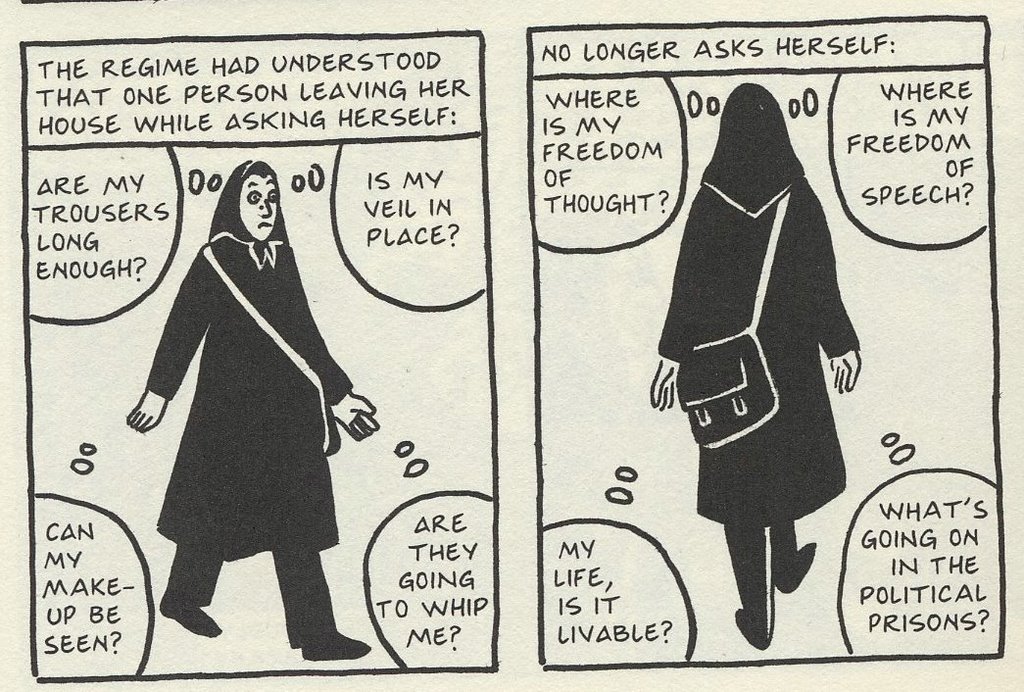
I devoured the first Persepolis last month (see review dated July 9, 2006) – from start to end in one sitting. Persepolis 2 is very different from the first, and it’s told accordingly - it’s hard, sad, tormented, and thoughtful. Picking up where the first book leaves off, Marjane is a young teen attending school in Austria to escape the war and growing fundamentalism in Iran. The transition proves difficult as she attempts to find her place is a society and culture so different from the one she has known at home. We witness Marjane’s isolation, drug use, love life, and depression in the stark black and white illustrations she creates for us. Following a period of homelessness, Marjane returns to Iran as a young woman and must again integrate herself into a society that she is from but no longer of. An amazing and beautiful story to read, mull over, and appreciate.
10 August 2006
Awesome: I Fuckin’ Shot That!
I love the Beasties but I was a bit skeptical when I heard that this concert film was shot by giving video cameras to random folks in the audience. But really, I should have known better…The sound quality is awesome, which immediately elevates this film well-beyond “bootleg” status, and the editing from the various cameras is creative, interesting to watch, and well done – even if the color is a bit washed out or yellow at times. Awesome is 90 minutes of non-stop action – no wonder these guys are still so skinny. Sure, the close-up shots reveal that it’s not 1986 anymore, but who cares? “Brass Monkey” will launch your butt off the couch, “Ch-Check It Out” will keep you on your feet and with the closing song “Sabotage,” you’ll be forming your own mosh pit in the living room. Beastie Boys, you rock.
08 August 2006
Dancer in the Dark
Last Christmas I heard Bjork’s version of “My Favorite Things” from The Sound of Music on the radio. The lyrics were the same as the original but the intonation was eerie – it was sung as a sad, emotionally wrenching lament. The DJ mentioned it was from the film Dancer in the Dark, and now, eight moths later; it finally reached the top of my Netflix queue. I’m a big fan of Bjork’s voice and music, especially the older stuff, so I wanted to enjoy this film – but there were parts, particularly in the middle, that were almost impossible to get through because the story-line is just so tragic. When one terrible circumstance after another happens it just gets a bit too depressing to watch. Bjork is quirky, lovely, and complex in the role of Selma, a blind factory worker desperately saving money for an operation that her son needs. However, some of the other characters – Bill, the landlord, and Jeff, the co-worker who loves Selma - are too wooden and one-dimensional. I have to say that the best part of the film was the scene where Selma sings “My Favorites Things” – it made everything else worthwhile.
07 August 2006
Charlie and the Chocolate Factory
I didn’t read the book, and have only a vague recollection of the original film, but this offering by Tim Burton is curious to say the least. All of the children, with the exception of Charlie, are despicable and Johnny Depp’s Willy Wonka is eerily like Michael Jackson – complete with a pale, expressionless face and Jackie-O sunglasses. The set design is pure eye candy and the Oompa Loompas steal the show with their song and dance routines. There’s also a pretty funny reference to Burton’s disastrous Planet of the Apes. At least someone can laugh about it now…
Despite all the fantastical candy making gadgets though, Charlie and the Chocolate Factory leaves you craving something with a bit more substance.
Despite all the fantastical candy making gadgets though, Charlie and the Chocolate Factory leaves you craving something with a bit more substance.
03 August 2006
Lost, Season 1
I’m a late arrival to the Lost party, and my excuse is that I relinquished my cable TV service 18+ months ago. However, seeing that so many people talk about the show with rabid enthusiasm, I added it to my Netflix queue to see if it was really worth all the froth. After watching all seven discs, in rather rapid succession, I abashedly admit to being hooked, line and sinker.
The plot has a great blend of supernatural intrigue and complex human personalities. I really enjoy how each episode shines a little light into a particular character’s past as it makes the show into something more than just “40 people on a freaky, creepy island.” There were a few bits and pieces that were a bit over-the-top but for every melodrama there were five totally captivating and spot-on scenes, so it more than compensated. I highly recommend the extra features DVD – it’s worth it for a “behind the scenes” look at the production of the polar bear and contained some hysterical footage of the original scene which involved the “bear” and the character Sawyer.
Didn’t I do a good job of not providing any spoilers? If you haven’t gotten on board with Lost, do so now. Season 2 will be available on DVD in September and I’m already queuing it up.
The plot has a great blend of supernatural intrigue and complex human personalities. I really enjoy how each episode shines a little light into a particular character’s past as it makes the show into something more than just “40 people on a freaky, creepy island.” There were a few bits and pieces that were a bit over-the-top but for every melodrama there were five totally captivating and spot-on scenes, so it more than compensated. I highly recommend the extra features DVD – it’s worth it for a “behind the scenes” look at the production of the polar bear and contained some hysterical footage of the original scene which involved the “bear” and the character Sawyer.
Didn’t I do a good job of not providing any spoilers? If you haven’t gotten on board with Lost, do so now. Season 2 will be available on DVD in September and I’m already queuing it up.
01 August 2006
11:14
11:14 is the debut film from director Greg Marcks and it’s certainly worthy of renting – especially if you’re a fan of dark comedies like Shallow Grave. Five separate stories converge in the moments leading up to 11:14pm and as the film unfolds we see the connections between the various characters. There are a few brilliant performances – Hillary Swank is hysterical as the convenience store clerk who’s desperate to keep her job, and Patrick Swayze has a particularly memorable scene with a dead body and a golden retriever. And I certainly can’t leave out the antics of three teen-age boys in a van… shaving cream, book burning, and a detached penis provide an entertaining mix of dialog and urban myth. The film gets off to a somewhat slow start, but the ending provides a big bang (pun intended) and an interesting surprise.
11:14 is available through Netflix. :-)
11:14 is available through Netflix. :-)
30 July 2006
Intensity
I don’t know why I read books like this. This isn’t to say that Dean Koontz’s Intensity was poorly written or a big, boring waste of time, it’s just that I should know better than to get involved with books that feature freaky serial-murderer rapist psychopaths – even if they are a work of fiction. The first section of the book is horrifying – a woman hides from a killer while he systematically tortures and executes everyone else in the house. You find yourself holding your breath and on-edge wondering what sort of insanity is going to unfold next. In the ensuing chapters you’re given brief reprieves where you’re allowed to fell invigorated, hopeful even – but that safety is snatched away in mere sentence or two and once again you’re left running through the pages hoping that it’ll be over and done with. My suggestion is to read Intensity as quickly as possible because waking up in the middle of the night fully confident that evil is right outside your door is inevitable…
26 July 2006
Night Watch
Based on the trilogy by Sergei Lukyanenko, Night Watch incorporates all the best elements of the first Matrix, Lord of the Rings and Harry Potter. Yup, we got shape shifters, a 12 year old boy, and a snowy owl. The exception here is that everything is dark, gritty, depressing, and spoken in Russian (with English sub-titles, of course). The “light” characters appear to permanently suffer from the DTs and the “dark” ones are a bunch of vampire junkies - one even looks like Elizabeth Wurtzel in her pre-medication days. The plot is the standard battle of good versus evil, but with some serious violence – one particularly gruesome scene involved a small pair of scissors doing an awful lot of damage. Blood flows freely and frequently and the special effects are quite graphic. My only complaint was that the first part of the ending was a bit disappointing – however, the ultimate conclusion more than made up for it. I’m definitely looking forward to the next installment. Let's hope it won’t suffer the same afflictions as the Matrix: Reloaded…
25 July 2006
Liz Durrett Part II
I’ve been listening to The Mezzanine for the last few days and there’s something going on with the vocals that I can’t quite put my finger on. When I wrote about Husk a few days back I compared Durrett’s sound to Mazzy Starr and the Cowboy Junkies but after listening to the new CD I’m no longer satisfied with that. This time around I’m having different impressions – and I'm totally reminded of the first time I heard Sinead O’Connor. I’m not saying that The Mezzanine sounds just like The Lion and the Cobra (which, upon re-listening to, does have that distinct “late-80s” sound to it) but there are some strong similarities to that album’s lesser known songs like “Just Like U Said it Would B” and “Drink Before the War” - it has something to do with the way the vocals float over and clash against the music – it sticks in your brain and haunts you.
Listen now to:
Knives at the Wall
All the Spokes (my hands down favorite)
The Mezzanine
In the Throes
Listen now to:
Knives at the Wall
All the Spokes (my hands down favorite)
The Mezzanine
In the Throes
24 July 2006
Prep
I spent most of my adolescence wishing I could escape my dull suburban life by attending boarding school. Like the book’s protagonist, Lee, I would spend hours looking over prep school admissions brochures and wishing I could be one of those teen-agers with fair-isle sweaters and long blonde hair. The thing about private schools that always squelched my interest though was the constant emphasis on sports. In public school gym was a joke and competitive teams were optional extracurricular activities, and that was worth something in my book.
Curtis Sittenfeld provides a psychological “escape hatch” for those readers (like me) who see too much of themselves in this tormented and insecure character – the entire story is told in retrospect. Lee, our narrator, is older now, well into adulthood and looking back at her high school experiences. However, we as readers acknowledge that the adult she is today is a manifestation of the girl she was then and the lens she uses to examine the past was initially developed during those years. Sittenfeld is brilliant at crafting dialogue and characters that resonate deeply to anyone who has ever been the odd one out or who has navigated the tricky road of an outsider wanting to be on the inside. I started reading Prep and couldn’t stop – and even though it left me emotionally exhausted and out-of-sorts in the end, I’m looking forward to her next book. Glutton for punishment right?
Sad insights include:
"I worried someone would notice me, and then when no one did, I felt lonely."
"And we matched each other well, our bodies fit. I didn’t know enough then to realize that doesn’t always happen – that sometimes you cannot settle on an angle with the other person, your weight won’t balance, your bones poke."
"…there are people we treat wrong, and later, we’re prepared to treat other people right."
"I've heard a thousand times that a boy, or a man, can’t make you happy, that you have to be happy on your own before you can be happy with another person. All I can say is, I wish it were true."
Curtis Sittenfeld provides a psychological “escape hatch” for those readers (like me) who see too much of themselves in this tormented and insecure character – the entire story is told in retrospect. Lee, our narrator, is older now, well into adulthood and looking back at her high school experiences. However, we as readers acknowledge that the adult she is today is a manifestation of the girl she was then and the lens she uses to examine the past was initially developed during those years. Sittenfeld is brilliant at crafting dialogue and characters that resonate deeply to anyone who has ever been the odd one out or who has navigated the tricky road of an outsider wanting to be on the inside. I started reading Prep and couldn’t stop – and even though it left me emotionally exhausted and out-of-sorts in the end, I’m looking forward to her next book. Glutton for punishment right?
Sad insights include:
"I worried someone would notice me, and then when no one did, I felt lonely."
"And we matched each other well, our bodies fit. I didn’t know enough then to realize that doesn’t always happen – that sometimes you cannot settle on an angle with the other person, your weight won’t balance, your bones poke."
"…there are people we treat wrong, and later, we’re prepared to treat other people right."
"I've heard a thousand times that a boy, or a man, can’t make you happy, that you have to be happy on your own before you can be happy with another person. All I can say is, I wish it were true."
Subscribe to:
Posts (Atom)